
















































|
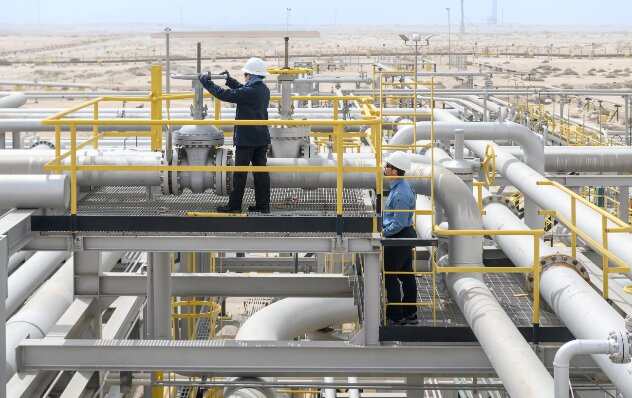
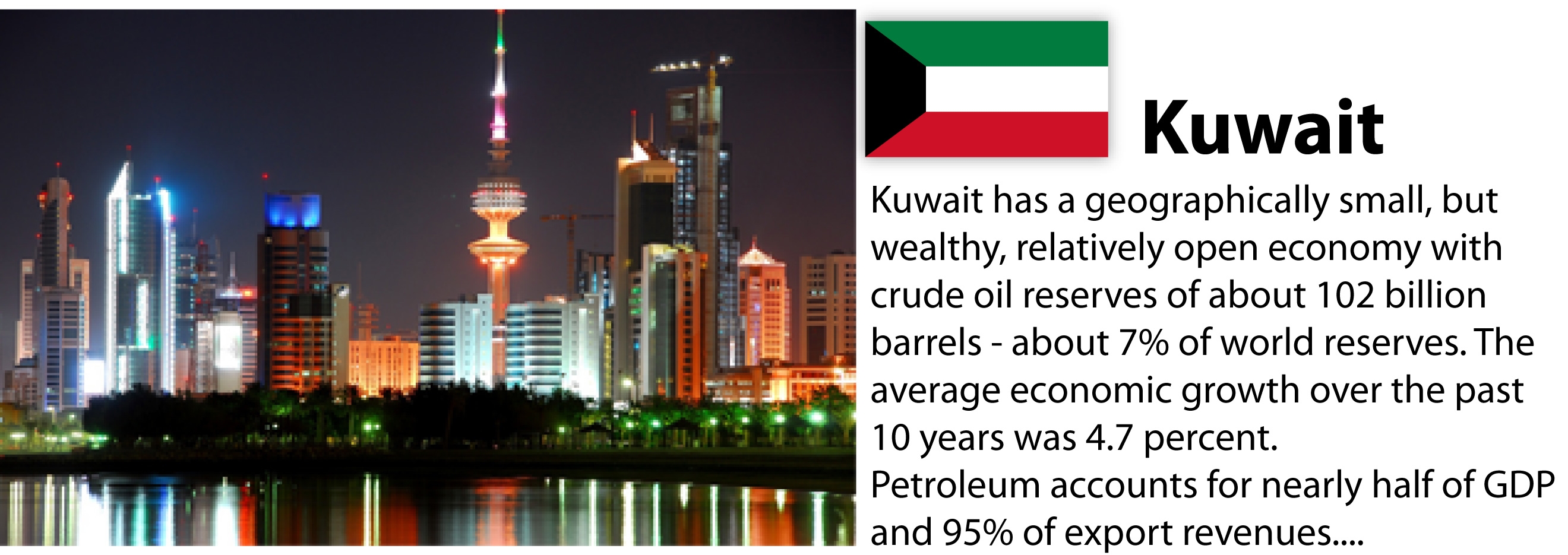
Kuwait has a geographically small, but wealthy, relatively open economy with crude oil reserves of about 102 billion barrels - about 7% of world reserves. The average economic growth over the past 10 years was 4.7 percent, while surplus generated by oil proceeds increased from USD 14 billion in 2001 to USD 41 billion in 2010. Petroleum accounts for nearly half of GDP, 95% of export revenues, and 95% of government income. Kuwaiti officials have committed to increasing oil production to 4 million barrels per day by 2020. In 2010, Kuwait passed an economic development plan that pledges to spend up to $130 billion over five years to diversify the economy away from oil, attract more investment, and boost private sector participation in the economy. According to IMF reports, Kuwait has maintained a largely stable macroeconomic environment and showed strong macroeconomic outcomes in recent years, but it still faces challenges to improve its physical and social infrastructure and to diversify its economic base. The economy remains oil dominated and the private sector is largely dependent on government spending and expatriate labour. The labour market is highly segmented: Kuwaiti nationals work primarily in the public sector—about 80 per cent of the Kuwaiti labour force is employed in the public sector—and Kuwaitis constitute only 7 per cent of the private sector labour force, while expatriates are employed mostly in the private sector. Kuwait has kept strong ratings by Standard and Poor's Ratings Service on its financial position with a stable outlook. The rating agency put the State of Kuwait at "AA" for long-term ratings, and "A-1+" for short-term ratings with a stable outlook for this rating. The ratings on Kuwait are supported by the sovereign rich resource, which has led to high levels of wealth and enabled it to build very strong external and fiscal balance sheet positions.
Essential Information Area: 17,820 sq km. Education Visas are required by all visitors except passport holders from Bahrain, Oman, Qatar, Saudi Arabia and the UAE. Transit passengers with a through booking on the same aircraft, to a third country are exempt. Passengers in transit who will be leaving the country within 24 hours are also exempt, provided they do not leave the transit area; i.e. they do not legally enter the country.
|
|


 Current local time


Basic Economic Indicators
Kuwait: Economic and International trade indicators {arimodule id="668" comment="Kuwait Economic Indicators"}{/arimodule} Source: IMF, CIA factbook.
This section of the article is only available for our subscribers. Please click here to subscribe to a subscription plan to view this part of the article.
Swiss Exports to the Arab world by commodity comparaisons between the Arab countries

Swiss Imports from the Arab world by commodity comparaisons between the Arab countries