MENA Startup Ecosystem Sees Explosive Growth in February 2025, Fueled by Strategic Investments and Landmark Events
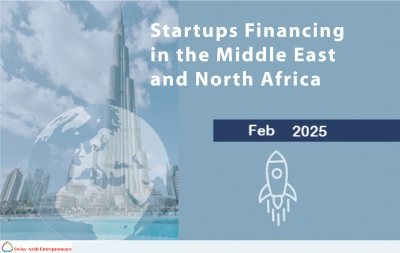
The Middle East and North Africa (MENA) startup landscape underwent a transformative period in February 2025, characterized by an unprecedented surge in investment activity. The region witnessed a substantial influx of capital, with startups collectively securing $494 million across a total of 58 distinct deals.
This figure represents a remarkable leap, illustrating a near fivefold increase when compared to the investment figures recorded during the same month in the preceding year.
This dramatic uptick in funding signifies a profound shift in the investment climate, particularly when considering the preceding month's dynamics. In January, debt financing constituted a staggering 90% of the total investment volume, indicating a heavy reliance on loan-based capital.
However, February presented a stark contrast, with debt financing plummeting to a mere 15% of the total investment. This abrupt transition underscores a clear pivot towards equity-based funding, suggesting a renewed investor confidence in the long-term growth potential of MENA startups. When isolating equity investments, February's growth becomes even more pronounced, revealing a 371% month-on-month (MoM) increase in investment activity.
A significant catalyst for this surge was the prominent role played by Saudi Arabia, which emerged as the region's leading hub for startup funding. Saudi Arabian startups successfully raised $250.3 million across 25 deals, establishing a dominant position within the MENA ecosystem.
This surge was significantly amplified by the LEAP 2025 conference, a landmark event that served as a platform for numerous startups to announce the successful closure of their funding rounds. The conference's impact extended beyond mere announcements, fostering a sense of momentum and attracting further investor attention to the Saudi Arabian market.
Following Saudi Arabia, the United Arab Emirates (UAE) secured the second position, with 15 of its startups raising a total of $203.5 million. While the UAE maintained a strong presence, Egypt experienced a comparatively subdued month, with eight startups raising a combined $27.5 million.
Oman, however, demonstrated a resurgence, reclaiming a spot among the top four with two startups securing $6 million in funding.
The fintech sector continued to assert its dominance, solidifying its position as the most attractive sector for investors. Last month, fintech startups successfully secured $274 million across 15 deals, demonstrating the sector's enduring appeal and its pivotal role in driving financial innovation within the region.
Insurtech emerged as a notable contender, raising $55 million through two substantial deals, while the logistics sector secured the third position, attracting $28.5 million across four deals.
February also witnessed a significant shift towards later-stage investments, indicating a growing investor appetite for mature startups with established track records. Tabby's successful Series E funding round, which garnered $160 million, exemplified this trend.
Similarly, Ula and Merit Incentives each secured $28 million in Series B funding, further underscoring the increasing focus on growth-stage companies. Taager and Khazna also achieved significant milestones, successfully closing their pre-Series B rounds with $6.7 million and $16 million, respectively.
Despite the surge in later-stage investments, pre-seed investments remained prevalent in terms of deal count, with 15 startups securing a total of $22 million. Series A startups attracted $158 million across seven rounds, while 10 seed-stage startups received $27.8 million.
In terms of business models, business-to-business (B2B) startups emerged as the most heavily funded category, securing $191.6 million across 33 deals. Business-to-consumer (B2C) startups raised $138.5 million across 18 deals, while six startups operating in both domains garnered a combined $164 million.
However, a stark gender disparity in funding persisted. Startups led by male founders secured a substantial $429 million, representing 87% of the total investment for the month.
In contrast, startups with female founders received a mere $200,000, while the remaining funds were invested in startups co-founded by both genders.ش