The Lean Startup: Lessons for Aspiring Entrepreneurs from Eric Ries
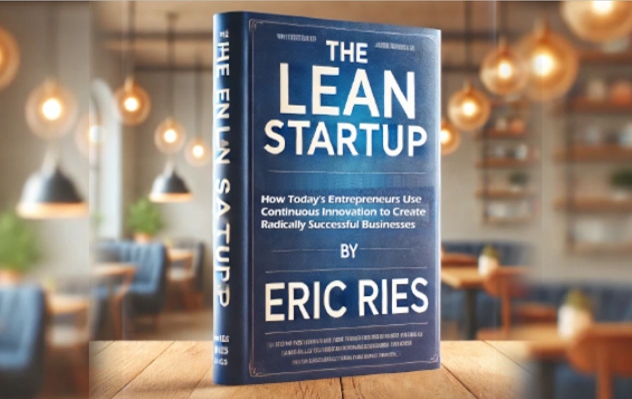
Eric Ries, the brain behind The Lean Startup, has revolutionized the way entrepreneurs think about starting and growing businesses. During his talk at Google, Ries distilled lessons from his bestselling book, sharing a management blueprint for tackling uncertainty and creating successful startups. For entrepreneurs eager to maximize their chances of success, here are some transformative insights from The Lean Startup philosophy:
1. Redefining Entrepreneurship
Entrepreneurship isn’t confined to Silicon Valley garages. Ries challenges the stereotype that being an entrepreneur requires working in tech startups. Instead, entrepreneurship is about creating something new under conditions of extreme uncertainty. Whether in a massive corporation or a small team, if you're innovating with uncertainty, you're an entrepreneur. This mindset opens the entrepreneurial door to anyone ready to innovate, regardless of industry or company size.
2. Validated Learning as the Goal
The essence of entrepreneurship, according to Ries, is validated learning - discovering what your customers actually want, not just building what you assume they need. This method replaces traditional metrics of success, like efficiency or feature lists, with a focus on learning what works through direct customer interaction and feedback.
To achieve this, Ries advises utilizing the build-measure-learn feedback loop, a continuous cycle of:
- Building a minimal version of the product,
- Measuring customer response, and
- Learning whether to persevere or pivot.
3. The Power of the Minimum Viable Product (MVP)
Startups frequently burn time and resources building polished products nobody wants. Ries champions the concept of the MVP, a stripped-down version of a product containing only the core features needed to gather validated learning.
As Ries illustrated in his talk, instead of launching fully built software, startups can use techniques like landing pages or simple prototypes to gauge customer interest quickly and inexpensively.
4. Pivoting is Not Failure
One of Ries's most compelling ideas is the pivot - changing course based on customer feedback. Pivoting is not a sign of failure but a marker of agility. The secret to successful startups is reducing the time between pivots. Each pivot refines the product, drawing closer to what customers truly need.
For entrepreneurs, Ries stresses that a startup’s runway isn’t just about cash flow but about how many pivots are possible before running out of resources.
5. Innovation Accounting: Measure What Matters
Ries introduces innovation accounting, a system designed to measure progress in startups where traditional metrics fall short. Instead of vanity metrics (e.g., page views or social media buzz), entrepreneurs should track actionable metrics tied directly to customer behavior.
Ries emphasizes that knowing your baseline metrics, setting goals, and rigorously measuring progress creates accountability and clarity in an otherwise uncertain process.
6. Embrace Uncertainty, Avoid Perfectionism
Ries’s candid anecdotes underscore a harsh truth: startups rarely succeed because of perfectly executed plans. In fact, failure is often due to building products no one wants. Instead of waiting for perfection, entrepreneurs should act on their hypotheses, gather real-world data, and adapt based on the findings.
Key Takeaways for Entrepreneurs
- Think scientifically. Approach entrepreneurship like a scientist: form hypotheses, test them, and adapt based on results.
- Start small, learn fast. Use MVPs to gather data quickly without over-investing in unproven ideas.
- Value learning over efficiency. Prioritize learning about customers’ needs over perfect execution of unnecessary features.
- Fail fast, pivot smart. Iterating quickly reduces wasted effort and improves your odds of success.

Final remarks
The Lean Startup methodology, as shared by Eric Ries, empowers entrepreneurs to navigate the chaos of innovation with discipline and focus. For anyone launching a venture or driving innovation within an organization, these principles serve as a guide to not just survive, but thrive in uncertainty.
So, whether you’re a solo innovator or part of a larger team, it’s time to think lean, act boldly, and prioritize learning above all. Success might not happen overnight, but with persistence, agility, and focus, you’ll give your startup the best chance to make an impact.